
Top 10 AI tools for a podcast production workflow
Ten AI tools for podcast preparation, editing, transcription and promotion. Build a minimal workflow with audio, quotation and cost checks.

The best AI podcast toolkit is not a collection of ten subscriptions. It should help you prepare the interview, edit without distorting meaning, deliver pleasant audio and introduce the episode to the right audience. These ten options follow that workflow. Their numbers indicate possible production stages, not a measured quality ranking.
Start small: keep one main recording and editing environment, then add only the function you genuinely lack. Several products below already transcribe, summarise and clip the same recording. Paying three suppliers for overlapping features does not automatically improve the show.
Ten tools, each with a primary role
1. Gemini Notebook, formerly NotebookLM: prepare questions
Gemini Notebook grounds its answers in uploaded documents and cites relevant passages. Use this approach to prepare an interview from authorised material. Our evaluation criterion: every factual question should point to a source you can inspect. Do not convert a generated summary into a statement attributed to your guest; read the original documents before recording.
2. Riverside: work from the recorded session
Riverside offers transcription and AI deliverables, including clips and show notes. Consider it when you want fewer transfers between applications. Check source-file recovery and full-episode export before judging only the highlights. A reliable original recording remains more useful than an elaborate chain of repair tools.
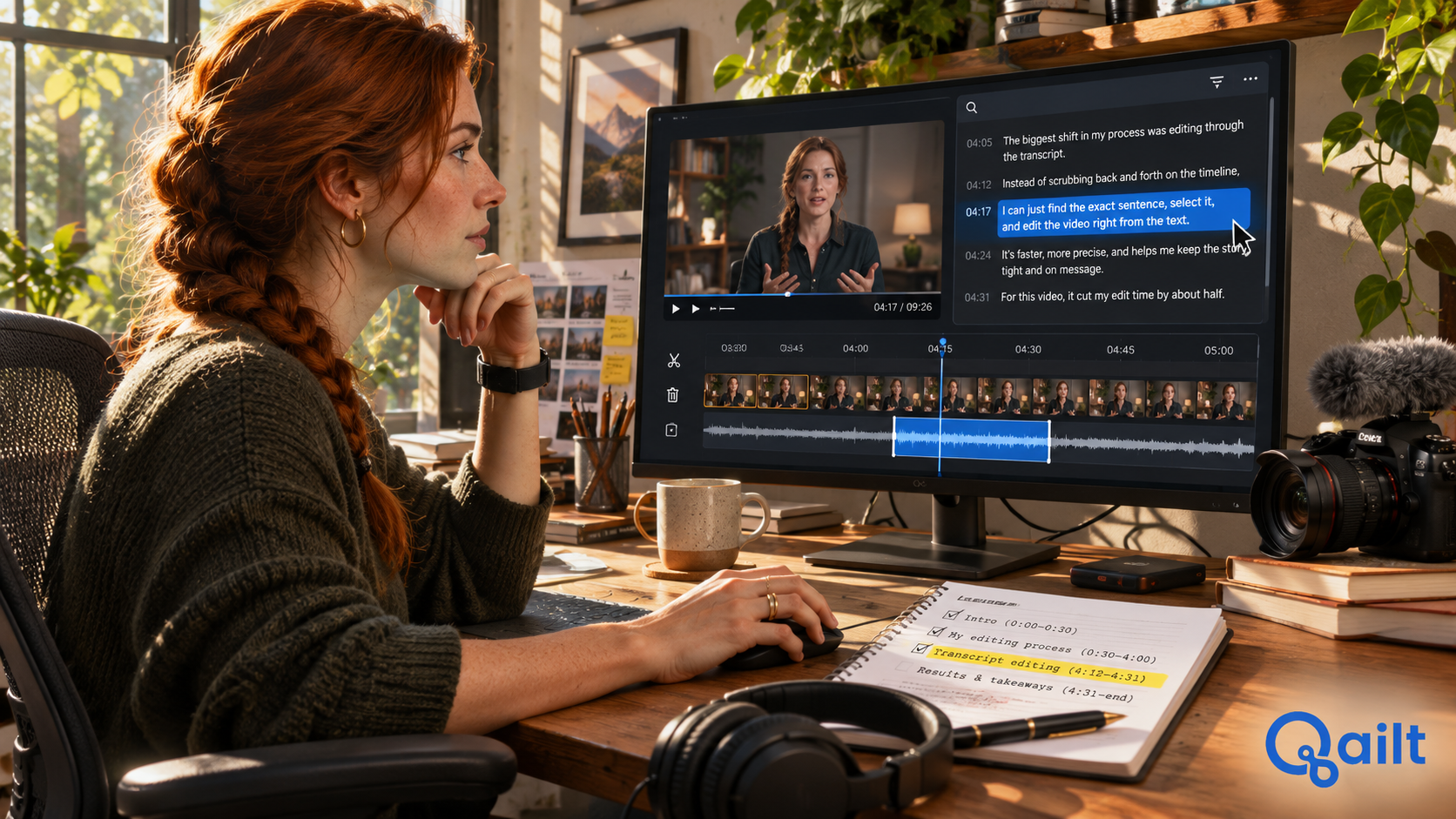
3. Descript: edit through the transcript
Descript supports audio and video editing through text. This can help locate a repeated explanation or remove a digression. Listen to every join: deleting a word can affect breathing, rhythm or the meaning of an answer. The QAILT Descript overview provides a starting point for exploring the product.
4. Adobe Podcast Enhance Speech: treat difficult speech
Adobe Podcast Enhance Speech treats noise and artefacts, with results that depend on how audible the speaker is in the original recording. Try a difficult passage and a clean passage before processing everything. Reject an improvement that changes the voice unnaturally or damages words. This feature is not translation and does not guarantee recovery of inaudible speech.
5. Auphonic: balance the listening experience
Auphonic offers automatic level and noise processing with controls affecting speech and ambience. Investigate it when two speakers have very different levels. Compare results through headphones and a phone speaker. Avoid stacking several aggressive cleanup passes: lower noise can still produce a less natural recording.
6. Sonix: create a transcript you can check
Sonix combines transcription, speaker identification, timestamps and a synchronised editor. Its role here is reviewable text, not a promise of flawless transcription. Check names, numbers and speaker changes. A quotation published on your website must match the audio even when the automatic text looks grammatically convincing.
7. Castmagic: draft episode notes
Castmagic turns a recording into suggested titles, show notes, chapters and other written material. Use a corrected transcript where the workflow supports it. Review claims, links and promises in the headline. A useful output is a faithful description with navigable references, not a pile of nearly identical summaries.
8. OpusClip: propose video highlights
The OpusClip podcast clip generator selects moments, reframes them and adds captions. Treat suggestions as a shortlist. Retain enough context to understand the answer and inspect each speaker’s framing. A tool-generated virality score is neither a guarantee of views nor editorial approval.
9. Eddy by Headliner: connect editing and promotion
Eddy supports transcript-based editing, exports and AI-generated promotional material. Try this route when your show begins mainly as audio. Check output files against your channels and ensure corrections remain retrievable. Compare the workflow with your current editor before adding another application.
10. ElevenLabs: produce authorised synthetic narration
ElevenLabs generates speech from text. Reserve it for an introduction, transition or other narration you control. Do not fabricate a guest’s answer or clone their voice without appropriate permission. Check voice rights, commercial use and pronunciation before publishing, and distinguish synthetic narration from the authentic interview.
Build a minimal stack
| Situation | Starting point | Add only if needed |
|---|---|---|
| Simple interview with clean audio | Your established recording and editing workflow | Notes or transcription if missing |
| Uneven speaker levels | Main editing environment | One audio treatment compared with the original |
| Video podcast needing promotion | Approved final episode | One clipping tool, not several by default |
For more depth, see our guides to audio noise reduction, video transcription and short clips. They help you evaluate a particular bottleneck rather than choosing an entire production chain because of one appealing feature.
A useful trial: one episode, four deliverables
Take ten minutes of authorised conversation with two voices, a hesitation and a specialist term. Prepare four outputs: a clean audio excerpt, transcript, episode description and short clip. Compare just two workflows using the same source file. Preserve an untouched copy so you can return to the starting point.
Record human correction time at each stage. Check that the clip preserves meaning, names are correct, notes point to the right moments and speech remains intelligible without sounding artificial. A successful export can still contain a serious editorial mistake.
Ask someone who has not heard the full interview to watch the excerpt. Can they explain the guest’s point without inventing missing context? Then compare their understanding with the complete exchange. This is a useful safeguard against a technically polished clip that makes a conditional answer sound absolute.
Testing disclosure: this is a suggested protocol, not an executed comparative benchmark. No time saving, audience growth or sound-quality ranking is guaranteed.
Costs, rights and publishing
Calculate the cost of a finished episode: uploaded minutes, generations, exports, storage and review time. Check watermarks, limits and formats in the plan you would actually use. Several services may each count the same raw minute; retries increase cost without producing another episode.
Creating a file does not necessarily replace podcast hosting or RSS distribution. Establish where the episode will appear, which version is final and who approves it. Retain participant permissions, music rights and source files. The best workflow reliably delivers a trustworthy episode, rather than merely generating the largest number of derivative assets.
Three checks before the first delivery
Should everything be automated? No. Automate repeatable steps while retaining a meaning check before distribution. A technically correct excerpt can still mislead. Do show notes need another subscription? Only if your editor’s existing notes remain inadequate after a trial. Can every voice and music track be reused? No: verify permission for the material and the intended use. Keep an episode record with the source, approved audio version, corrected transcript, rights and reviewer. It prevents an old version from resurfacing in the next promotional asset. If a correction arrives after release, update the master record first, then list the descriptions and clips affected instead of assuming they all update automatically.
Related tools

Descript
Descript records and edits podcasts, interviews, and videos using a transcript synchronized with the audio and video tracks.
Read next

Top 10 AI tools for social media managers
Ten AI tools for social media workflows: visuals, video, writing and planning. Compare approval, formats and real campaign costs without duplicate subscriptions.

CapCut alternatives for PC: editing, captions and exports
Clipchamp, Shotcut or Resolve: test your files, vertical layouts, captions and export limits before switching from CapCut on a PC.
Free Descript alternatives for editing spoken video
Clipchamp, Kdenlive or Resolve: compare text-based cuts, timeline editing, captions and free exports for interviews and filmed podcasts.