Create an avatar from a photo with Argil
Build an avatar from a portrait and test it in a short talking video.

What you will create
Prepare a personal avatar from a portrait, then review a short spoken sequence. The goal is a clear presentation, not a perfect imitation: check the script, voice and facial movement separately.
Before you start
Use your own adult portrait or that of an adult who expressly authorized both the transformation and intended use. Check rights to the photograph too. Do not present an avatar as a spontaneous testimonial or a real recording of someone. Prepare a clear AI-created disclosure if you distribute the result.
Choose a sharp, well-lit image with one fully visible face. Avoid additional faces on background posters. Check access to personal avatars, required credits and export conditions before generating. Complete any consent verification rather than trying to bypass it.
Step-by-step
- In avatar creation, choose the personal-image route and upload the authorized portrait. This differs from generating a character from a prompt.
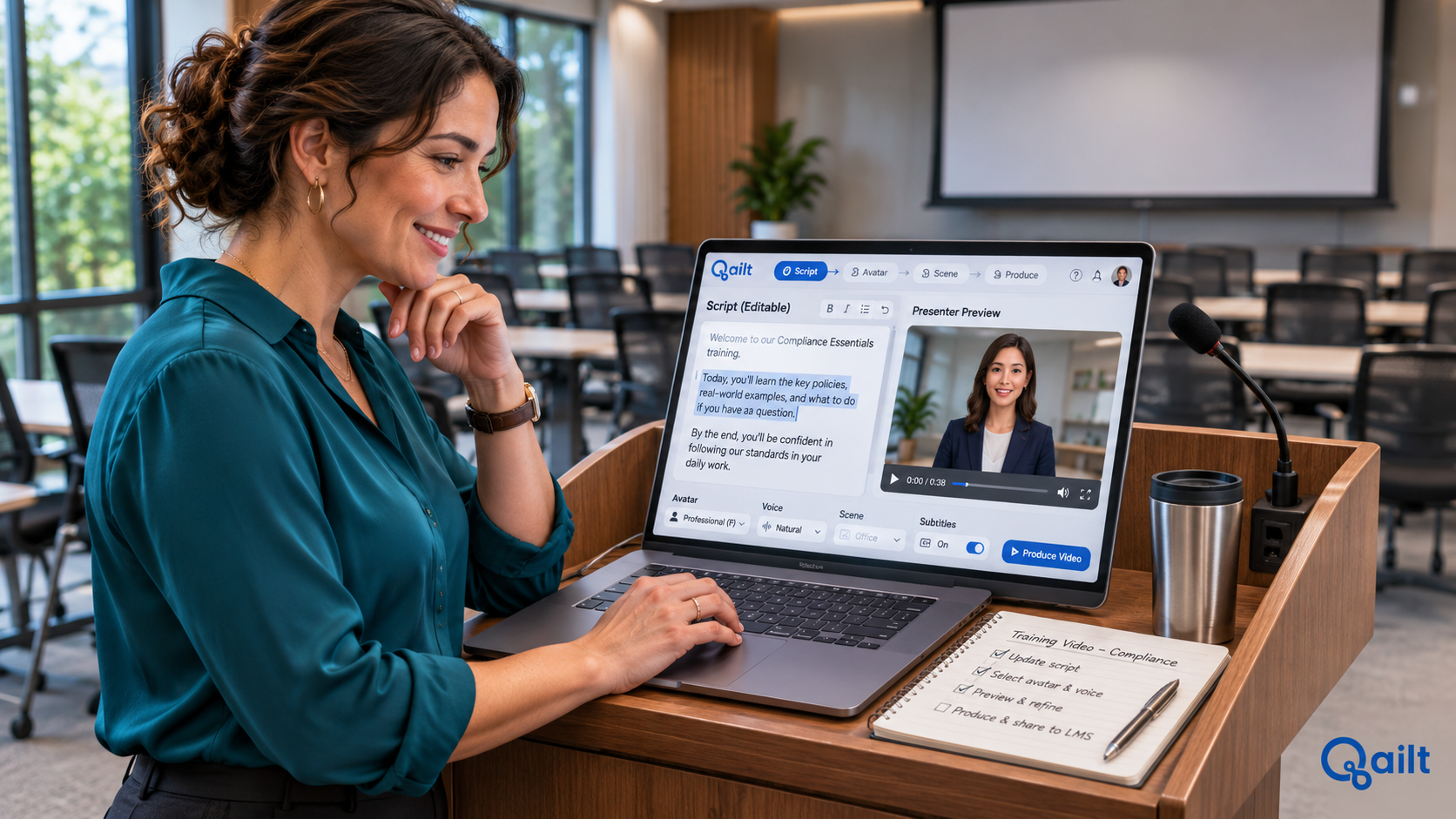
- Create a sequence with that avatar and add two test sentences. Select an available voice suited to the language without copying an unauthorized real person’s voice.
- Review the script and voice in preview. A motionless face at this stage does not prove failure: lip synchronization is produced during generation.
- Once the text and options are correct, check the displayed cost and generate the short excerpt. Inspect the animated result rather than only the earlier preview.
- Keep a reference version. Change one element at a time if needed, then check the final file before distribution.
Example to adapt
For a fictional workshop introduction: “Hello, I’m presenting a twenty-minute drawing exercise. Prepare a blank sheet of paper and a pencil.” Add neither a promised outcome nor a fabricated customer endorsement.
First watch without sound, looking for a distorted mouth, changing face or abrupt movement. Then listen without watching: are “twenty minutes” and “pencil” understandable? Finally, watch and listen together to detect any mismatch between speech and lips.
If a sentence causes trouble, simplify it while keeping its meaning. Do not change portrait, voice, wording and framing simultaneously: you would no longer know which adjustment improved or degraded the result.
Check your result
- Does the face remain consistent throughout the sequence?
- Does mouth movement follow speech without distracting delay?
- Is the instruction understandable without captions?
- Do any captions actually match the script?
- Does the version intended for sharing avoid confusion with authentic footage?
Common problems
A portrait is hard to animate: start again with a simpler, better-lit image. A still image before generation: distinguish preparation from the animated render. Incorrect pronunciation: expand abbreviations and try a short sentence. Insufficient credits: check conditions before purchasing. Unconvincing output: do not publish merely because generation completed; human review remains necessary.
Next steps
Read the Argil overview. Keep the authorized portrait, script and selected version as a clear record of what was created and approved.