Write a first YouTube script in the Subscribr Canvas
Plan a YouTube video in the Canvas, revise the opening in the script editor and export a version for recording.
What you will create
A short YouTube script built around a reproducible demonstration, followed by a version reviewed aloud. The goal is text ready for rehearsal, not a promise of views or audience retention.
Before you start
Use an already configured Subscribr account. Check displayed credits and conditions before generation; do not activate an extra purchase for this exercise without deciding to do so. Choose a topic you can explain and check yourself, using your own notes rather than a copied script.
Step-by-step
- In Canvas, explain the audience, intended result and available information in chat. Answer the planning questions before requesting a complete draft.
- Review the outline: opening, demonstration, check and conclusion. Remove anything unrelated to the promised result.
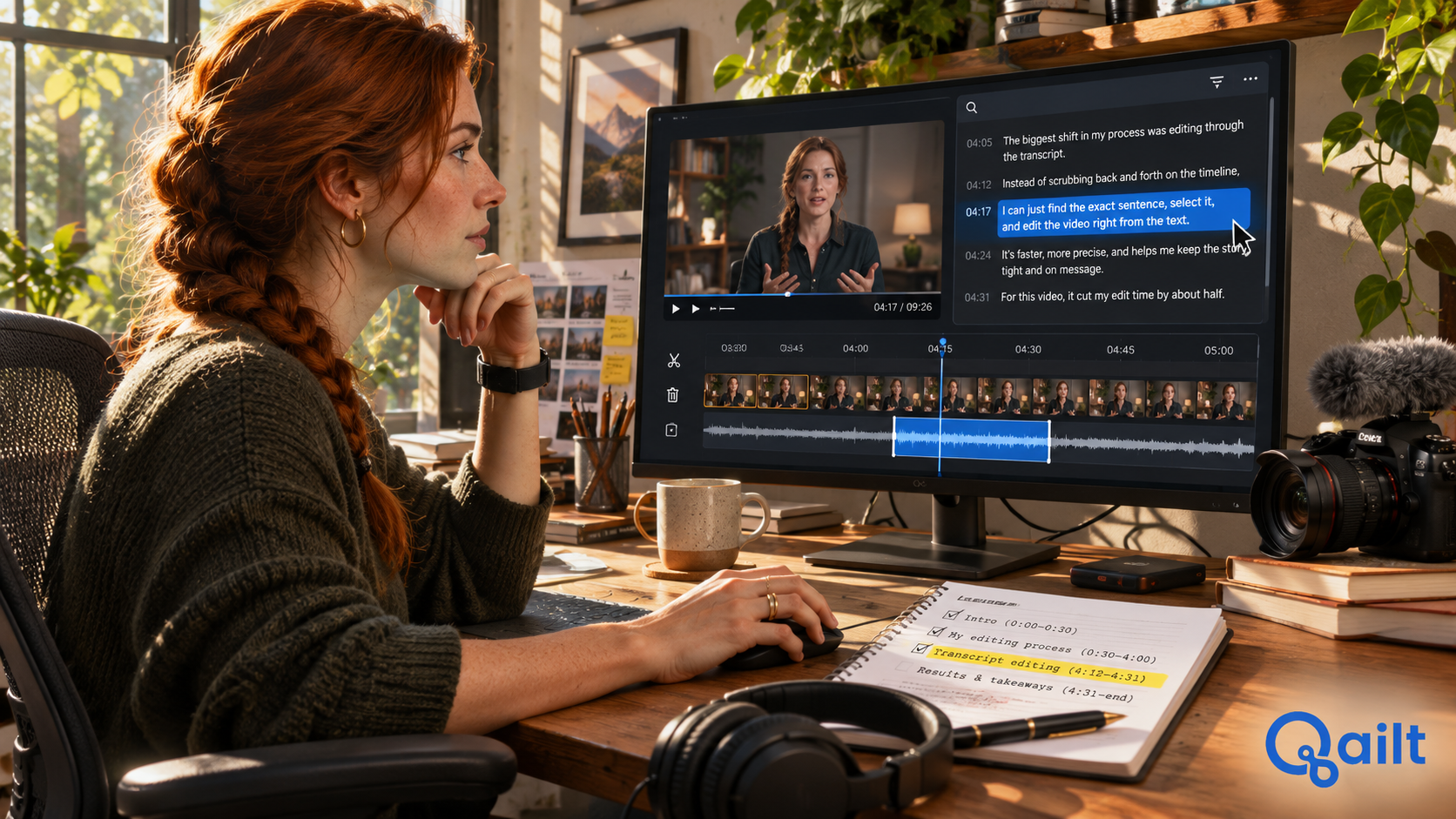
- Switch to Script mode to expand the outline. Check the text in the editor, not just the chat response.
- Select an overlong passage and request a targeted revision. Compare both versions to preserve useful steps.
- Read the script aloud with a timer. Adjust it, then use export to copy the chosen version or rehearse with the teleprompter. No publication is necessary.
Example to adapt
Original brief:
Audience: beginners organizing their documents.
Topic: distinguish a draft file from an approved version.
Demonstration: three fictional files, no personal data.
Show an ambiguous name, then names with topic, date and status.
Do not promise automatic backups or additional security.
Finish with a check the viewer can reproduce.
Prepare three examples yourself: “document-final-final”, “workshop_2026-11-14_draft” and “workshop_2026-11-14_approved”. The script should explain that naming helps identification but does not prove that a document was actually approved.
Suggested targeted revision: “Shorten this transition without removing the distinction between the file name and actual approval. Do not add statistics.”
Check your result
- Do the title and opening accurately announce the demonstration?
- Can viewers understand each example without hidden background knowledge?
- Does the text preserve the caveat about actual approval?
- Was duration measured aloud rather than inferred from an automatic promise?
- Does the exported copy match the latest reviewed version?
Common problems
A generic draft often means the brief is too vague: add an audience and concrete example. If a rewrite removes an important caveat, restore it. If the opening promises too much, narrow the promise instead of inventing results. A more natural style does not automatically make claims true.
Next steps
Visit the Subscribr overview. Keep your brief, approved outline and review checklist for the next script.