Clone your own voice with ElevenLabs
Compare ElevenLabs Instant and Professional Voice Cloning, and prepare recordings of your own voice to test the result.

What you will create
Prepare a clone of your own voice and assess its accuracy using new text. A usable clone should make the words intelligible and maintain a consistent voice, not merely resemble your tone for a few seconds.
Before you start
Use only your own recordings for this exercise. Do not use a colleague, customer or celebrity's recording. Keep the test private and do not present synthetic speech as a statement that someone actually recorded.
Instant cloning is suitable for a first experiment with roughly one to two minutes of clean audio. Professional cloning needs more recordings, an eligible plan and verification of your own voice. Check access and generation costs first; do not move to professional cloning solely because a first attempt sounds disappointing.
Step-by-step
- Choose one use case. For example, aim for calm instructional narration. Maintain that style during recording instead of alternating whispers, shouting and impressions.
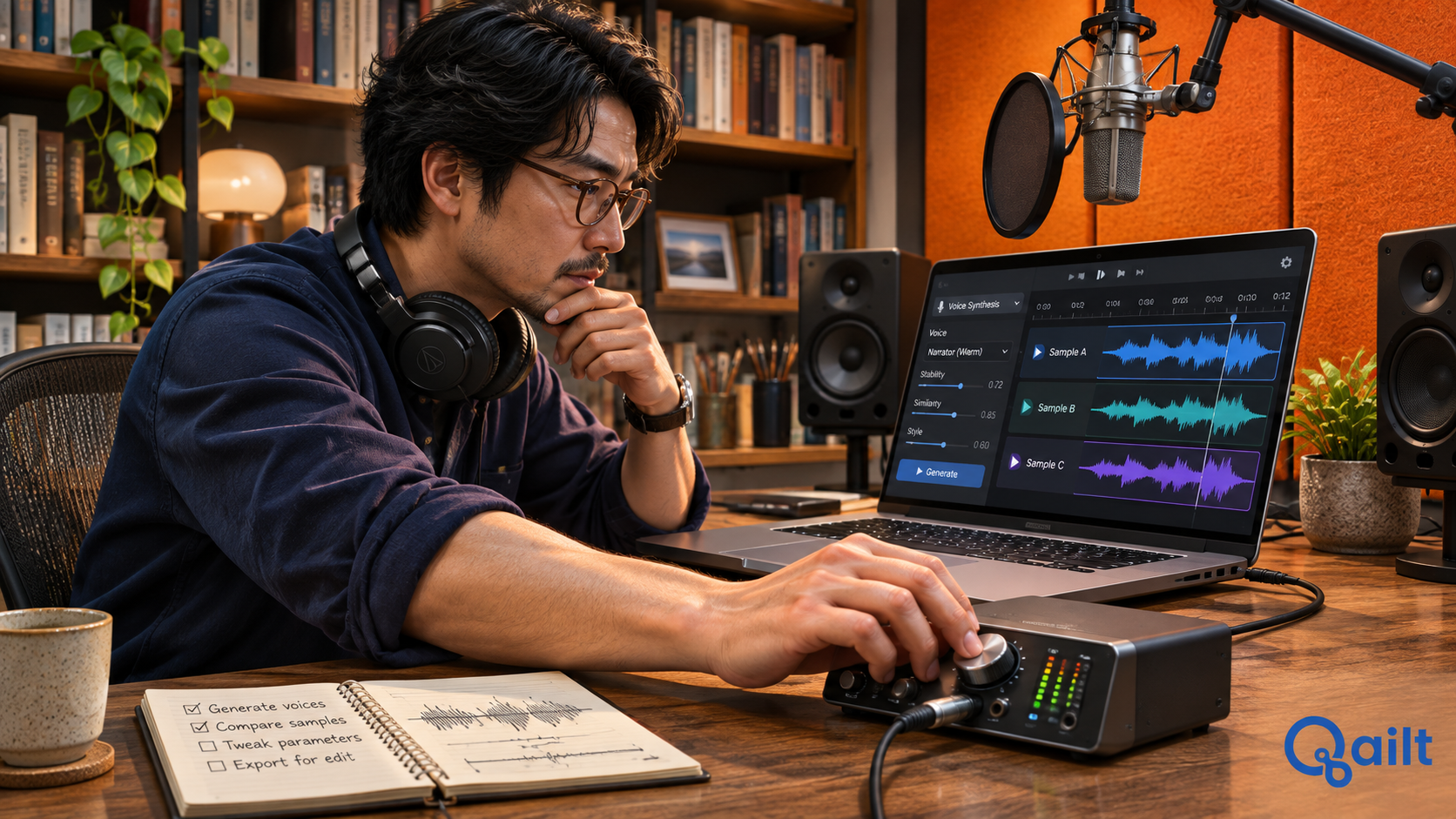
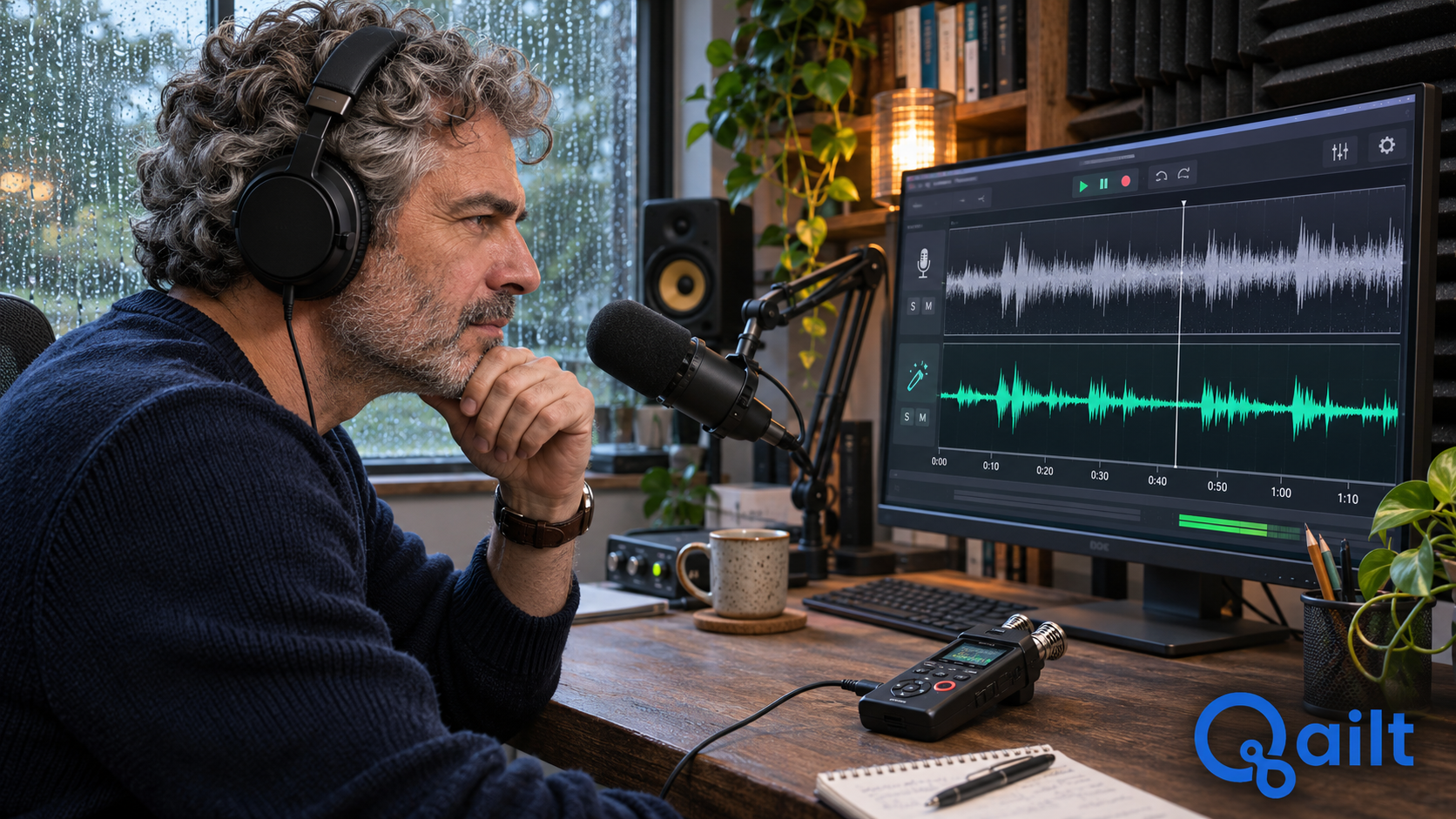
- Record and listen. Speak alone in a quiet space, keeping a consistent microphone distance. Reject distorted takes and recordings covered by music. A better recording is preferable to a pile of poor samples.
- Create the instant test. In Voices, add a voice and select Instant Voice Clone. Upload your recording, give it a recognizable name and complete the requested confirmations truthfully. Complete any voice verification yourself.
- Test different text. Find the clone in My Voices and use it for a short generation. Keep exactly the same text when comparing two attempts, otherwise you cannot tell what improved the result.
- Decide after listening. Note defects before changing a setting. If you later choose professional cloning, follow its separate process and wait for processing to finish; it is not simply an export of the instant clone.
Example to adapt
Original test text: “The Workshop folder contains twelve examples. Before sharing the link, check that the final version is selected. Why does this check matter? It prevents a draft from being distributed.” This tests a name, a number, a question and several transitions. It is not an output produced by the tool.
Check your result
- You can understand the words without reading the text.
- The pacing remains natural between sentences.
- The name and number are pronounced correctly.
- The voice does not abruptly change character partway through.
- You can distinguish recorded files from synthetic ones.
Common problems
Metallic or inconsistent output: listen to the source recording before buying a higher plan. Inaccurate accent: compare using the same text and try a more representative recording if necessary. Unavailable professional clone: check its processing status. Perfect accuracy and a precise completion time are not guaranteed.
Next steps
Explore ElevenLabs on QAILT and the guide to preparing a voice-over. A library voice may be enough if your project does not require your own vocal identity.