Choose a narration voice with Voxify
Compare two readings of the same text and choose a clear voice suited to your narration.

What you will create
Choose a narration voice by comparing two readings of the same text. Your main criterion is whether the information is understood, not merely whether the voice is appealing. You will have a short script and a review checklist for deciding which version fits your project.
Before you start
Prepare original text without confidential information. Use catalog voices rather than trying to imitate a real person. Check the generation, download and usage provisions of your plan before producing a long recording.
Voxify's presentation pages do not all give the same voice and language counts. Rely on the catalog actually available for your project. Likewise, do not expect every voice to offer every advertised control: begin with the standard reading and change only visible options.
Step-by-step
- In the Voxify generator, choose a language and accent suited to your audience, then a catalog voice.
- Paste a short script and generate a preview. Listen before processing a longer script.
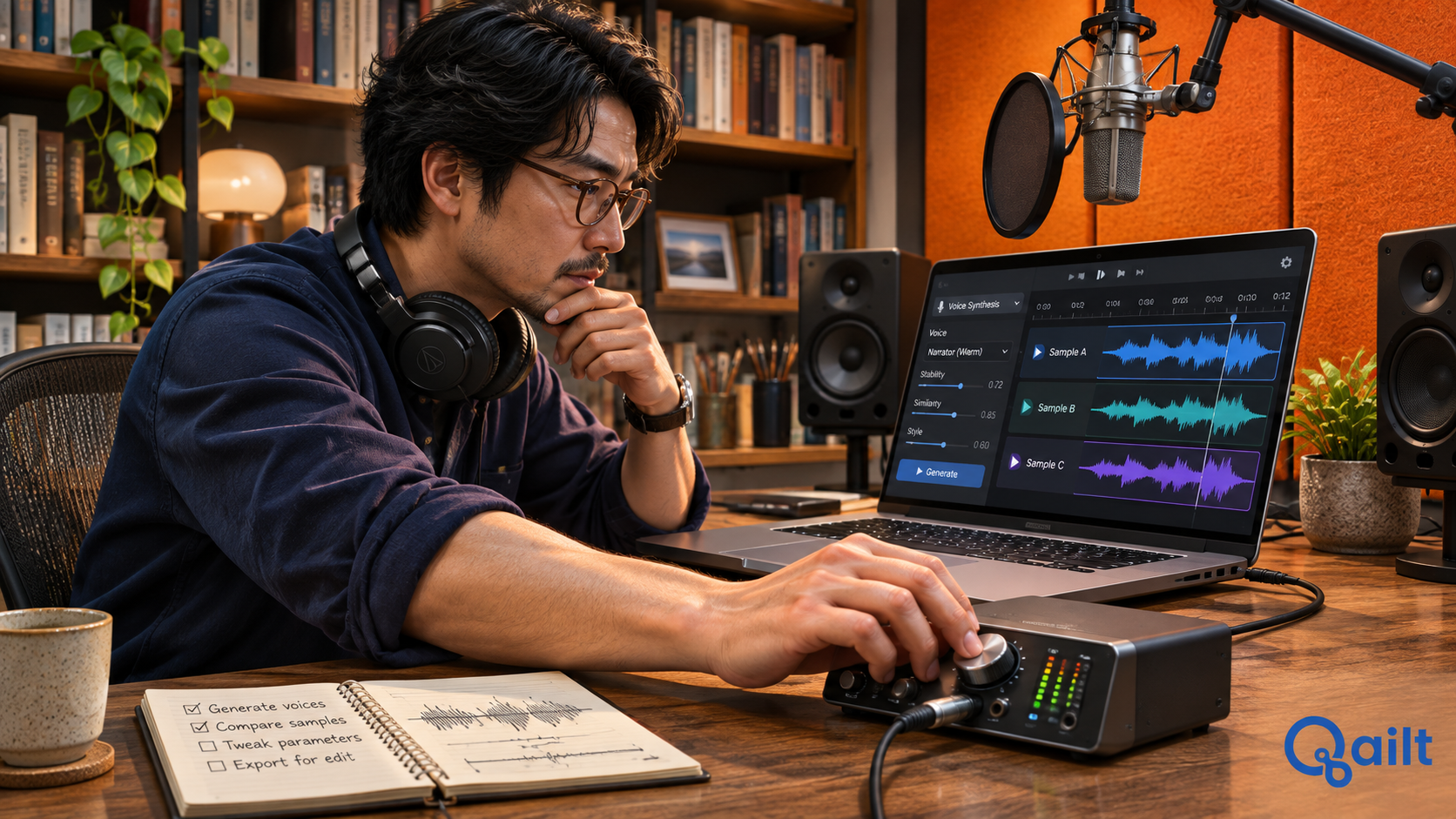
- Compare a second voice using exactly the same text. If a speed control is available, change only that parameter for another test.
- Keep the best variant after checking its wording and audio. Verify export conditions before downloading.
Example to adapt
Fictional script: “Welcome to Horizon workshop. The session lasts twenty-five minutes. Prepare three sheets of paper and a pencil. We will begin by drawing simple shapes, then observe the shadows.”
The reading must communicate three specific details: twenty-five minutes, three sheets and one pencil. Writing quantities in words avoids leaving their notation to determine an unexpected reading here. If your actual project uses a particular name, include it in a separate test and have its pronunciation checked by someone who knows it.
Version A: the selected voice with its initial settings. Version B: another voice, identical script. If you then try a different speed, keep a separate version C. Do not change the text, voice and speed simultaneously: you would not know which change improved the result.
Check your result
- Information: can a listener repeat the three details without reading the script?
- Phrasing: is there an audible separation between duration, materials and activities?
- Articulation: are the final words of each sentence understandable?
- Purpose: does the delivery suit calm instructions rather than an energetic advertisement?
Record a specific issue instead of a vague judgment: “insufficient pause after minutes” suggests a correction; “not professional enough” does not identify what to change. Comparing public demos does not replace checking your own text.
Common problems
Mispronounced name: test suitable wording without changing the meaning. Rushed reading: shorten sentences or adjust speed if available. Expressive but unclear voice: prioritize intelligibility. Missing option: do not assume upgrading will reveal it; first check availability for the selected voice.
Next steps
Read the Voxify profile on QAILT. Keep the final script, voice name and settings with the audio. This record supports revisions without guaranteeing that every future version will sound identical.